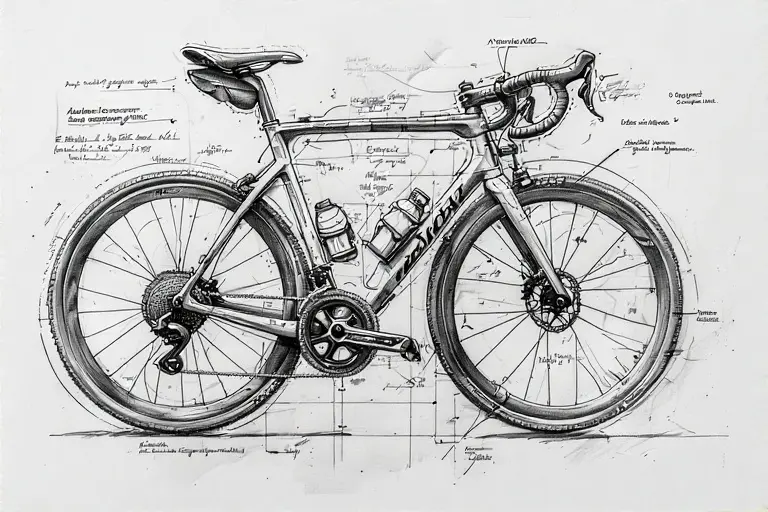
Bikepacking Aero Calculator: What Your Bags Cost in Watts
Short answer: at 20 km/h into a 25 km/h headwind, a handlebar roll or a pair of fork bags costs roughly 9–10 W each. A frame bag or saddle bag costs under 1 W. Where you pack matters more than how much you pack.
The Aero-Pack Lab is a free tool for anyone riding a self-supported brevet, a 400 km night ride or a multi-day trip. Switch bags on and off, set their weight, and see the cost in watts plus the effect on balance.
Try the Aero-Pack Lab
Aero-Pack lab · self-supported ride
Pack for the night. Pay the price in watts.
Switch bags on, set their weight, or drag them onto the bike. The glowing dot is your centre of gravity. The wind tunnel shows what each bag costs you into a headwind.
Headwind 25 km/h →
Drag to rotate
- Extra power
- Total weight
- Front / rear load
- Centre of gravity
Your gear · tap, or drag onto the bike
Indicative estimates. Bare bike 9 kg, rider on the hoods. Bag drag values are tuned to published tests: Cyclite touring set, Cyclite fork bags and Tailfin. Real results vary with your bike, bags and position.
On a phone? The interactive lab needs a wider screen. Open this page on a laptop or tablet to use it. The results and rules below work on any device.
What the tool shows you
- Extra power: the watts you add to push luggage through the air and over the road.
- Total weight: rider, bike and gear.
- Front / rear load: how weight is split between the wheels on climbs and descents.
- Centre of gravity: how gear moves it up, forward or back compared with the bare bike.
The 3D wind tunnel shows air hitting your setup. Particles shift from blue to yellow to red where the airflow is most disturbed.
Which bags cost the most?
Tool estimates at 20 km/h, 25 km/h headwind, default weights.
| Bag | Drag cost | Verdict |
|---|---|---|
| Handlebar roll | ~9 W | Costly |
| Fork bags (pair) | ~10 W | Costly |
| Two bottles | ~2 W | Fine |
| Saddle bag | <1 W | Cheap |
| Frame bag | <1 W | Cheap |
| Top-tube bag | <1 W | Cheap |
Bags in front of the wheel or out in the airflow are expensive. Bags behind the rider or inside the frame triangle are almost free.
How to pack for a night ride
- Fill the frame bag first. Heavy items (tools, spare tube, food) go here. It is low, central and nearly free aerodynamically.
- Use the saddle bag for light, bulky items such as a jacket or arm warmers. Heavy loads far behind the axle can make steering feel light.
- Keep the handlebar roll small, or skip it. It has the biggest drag penalty for the weight it carries.
- Add fork bags only if you must. They sit low, which helps handling, but cost the most watts.
- Check balance on descents. A front-heavy bike loads the front wheel more downhill. Brake early and keep your weight back.
Why centre of gravity matters
Every kilo you add moves the balance point of bike and rider. Gear mounted high, like a big handlebar roll or a loaded top-tube bag, makes the bike feel top-heavy when you stand or corner. Gear mounted low and central keeps handling predictable, which matters at 3 a.m. after 300 km.
How accurate is it?
These are indicative estimates, not lab results. The model assumes a 9 kg bike and a rider on the hoods. Bag drag values are tuned to published tests from Cyclite and Tailfin. Your bike, bags and position will change real results, so use the tool to compare setups, not to predict exact watts.
FAQ
How much power does a handlebar roll cost?
In our model, about 9 W at 20 km/h into a 25 km/h headwind. Less with no headwind, more at higher speeds.
What is the most aerodynamic way to carry gear on a bike?
Inside the frame triangle and behind the saddle. Frame bags and saddle bags add the least drag.
Does weight or drag matter more on long rides?
On flat or windy routes drag dominates. On steep climbs weight matters more. Use the gradient slider to see both.
Is the tool free?
Yes. Use it as often as you like when planning your next brevet.
Plan your next ride
Testing a setup at home is cheaper than finding a problem at 2 a.m. Check the upcoming Audax Latvia events and plan your luggage with the Aero-Pack Lab first.